


What Death Taught Me About Living

(And the Books That Helped Me Along the Way)

When I was 14, my mom was diagnosed with cancer. When I was 15, I started having conversations about death that most grown men spend their lives avoiding. And a week before my 16th birthday, she was gone.
Losing your mother at that age, right in the middle of becoming whoever you're going to become, changes you. It doesn't give you a philosophy. It gives you a fracture. You don't think about death. You live with it. It moves in. It impacts everything.

For years, I did what a lot of men do: I put my head down and tried to push through it. I didn’t know how to sit in sadness. I didn’t know how to communicate pain. I became a "what do we need to do to get through this as fast as possible" type of person. And eventually, that turned into substance abuse. Alcohol became the escape.
I’ve been sober now for over 17 years. But grief doesn’t have a finish line. It revisits you. It grows up with you. Especially when you lose someone that early.
In the past two years, I’ve had a few childhood friends pass away—in their late 30s. Guys I laughed, played sports, and came of age with. And man, that hits differently. There’s this urgency it creates, this pressure to live well, to not waste time. But that urgency isn’t always healthy and sometimes it spirals into anxiety or unrealistic perfectionism.
I started reading more about death not because I was obsessed with it, but because I wanted to understand it. I wanted to find language for the fog. I wanted to know what to do with the anger, the confusion, the absoluteness. I didn’t want to keep pretending I was part of some elite, invincible generation that wasn’t going to die.
Our society hides death. We don't see people die at home anymore. We shuffle the elderly off to nursing homes. We build billion-dollar "anti-aging" industries to sell the illusion that we won't disappear. But we will. We all will.
And maybe—if we actually acknowledged that—we’d live with more compassion. Not just for others, but also for ourselves.

These books helped me sit with death without running. Some are direct explorations of dying. Others are memoirs or philosophical reflections. All of them helped me process, appreciate, and understand:
✨ Staring at the Sun by Irvin D. Yalom
This is my second Yalom book (after The Gift of Therapy) and it was phenomenal. He blends existential therapy with personal stories in a way that feels human, not clinical. His take on Stoic philosophy and "here and now" therapeutic techniques really landed.

✨ The Last Lecture by Randy Pausch
If you’re not crying by the end of this, check your pulse. A dying man giving his final lesson—not about death, but about living with purpose. It hit me hard.

✨ When Breath Becomes Air by Paul Kalanithi
Written by a young neurosurgeon diagnosed with terminal cancer. The voice is calm, wise, and clear. He talks about identity, meaning, and the moment when the future disappears. I read this in 2018 and still think about it often.

✨ Smoke Gets in Your Eyes by Caitlin Doughty
Written by a mortician who argues that our culture is in denial about death. She mixes memoir with history and cultural critique. It’s oddly comforting and darkly funny.

✨ Tuesdays with Morrie by Mitch Albom
A classic. I avoided it for a long time because I assumed it was too soft or sentimental. It’s not. It’s deep, clear, and full of heart.

✨ Man’s Search for Meaning by Viktor Frankl
I read this back in 2016, and it floored me. A Holocaust survivor and psychiatrist finding purpose in suffering. Heavy but essential.

✨ Kill Anything That Moves by Nick Turse
Not a book about death in the abstract. This one is about real war and violence—systemic, political, and devastating. It shook me. It made me think deeply about how sanitized our idea of death has become.

✨ Everyone Loves You When You’re Dead by Neil Strauss
This is a wild card in the list, but it belongs. Strauss interviews musicians and celebrities and gets these raw, revealing moments. It’s a study in what people really say when they drop the performance. And that, too, is connected to death—what we leave behind.

✨ Spook by Mary Roach
A scientific, skeptical, and sometimes hilarious look at what might happen after we die. Not for everyone, but if you like curious detours, it’s worth the ride.

✨ Psychology of Suicide by Shneidman, Farberow, & Litman
I read this back in 2017 during a particularly reflective season. It’s not light reading, but it helped me understand the psychology behind some of the darkest human moments. And that kind of understanding matters.

✨ Conversations with Rachael by Kenneth Barbb (My Uncle)
This was impactful not because it was about death, but because it was written by my uncle who is no longer with us. Reading it connects me with him, oddly enough, in a way that we never connected in real life. Rest in Peace Uncle Kenny.

These books didn’t give me answers, but they gave me questions worth sitting in. They gave me frameworks for grief, and language for things I had locked away. They reminded me that part of being alive is learning how to be with the fact that none of us are here forever.
If this post resonates, you might also enjoy [this one about reading with intention]("You're Reading Wrong") — where I talk about how grouping books by theme helped me start thinking deeper.
But this one… this one stands on its own.
Because death does too.
— Phillip
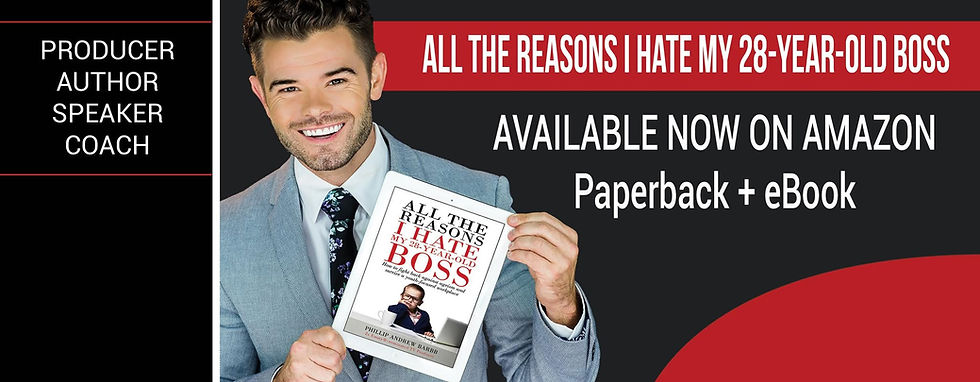
About Phillip Andrew BarbbI’m a high-performance coach, Emmy-nominated television producer, and author of All the Reasons I Hate My 28-Year-Old Boss. I know what it feels like to be successful on paper but restless in spirit.
Ready to reset and reconnect with purpose? Join the next Sunday Solutions session at www.phillipbarbb.com.


Comments